CRM as a Growth Engine: From Fragmented Customer Data to a Data-Driven Sales Culture
Learn how to transform CRM from a passive tool into a growth engine through governance, process discipline, and data-driven culture.

Rasmus Rowbotham
Founder of Foundbase and experienced entrepreneur with over 10 years of experience in building and scaling businesses.
1. Introduction: CRM beyond software
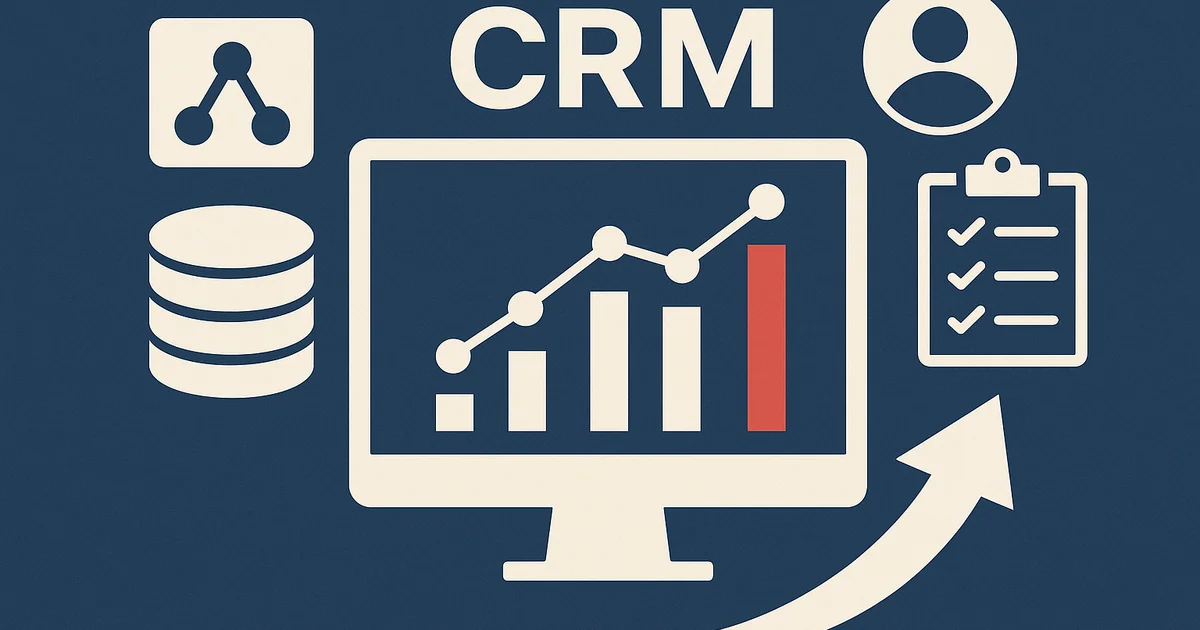
Most companies view CRM as a contact database. In practice, it’s the line between reactive and proactive sales. After 15+ years designing CRM structures across SaaS, B2B, and service firms, I’ve seen one truth: only teams that treat CRM as a growth engine—not an archive—scale predictably.
CRM must become the operating system for sales. That requires more than configuration—it’s about governance, behavior, and shared accountability.
2. From passive tool to active growth engine
CRM delivers value only when it drives momentum. Most fail because they stop at implementation, not adoption. Active CRM means prioritizing next actions, not storing past data.
- Passive CRMs show who you talked to.
- Active CRMs tell you who to talk to next—and why.
The transformation happens through data discipline and process design, which brings us to CRM governance.
3. CRM governance – the backbone of growth
Governance defines ownership, structure, and accountability. Implement it in three layers:
- Structure: Standardize fields, stages, and naming conventions. Example: replace free text “Industry” fields with dropdown lists.
- Process: Define exactly when a lead becomes a deal and when a deal is closed-lost. This drives data integrity.
- Ownership: Assign a data steward (Sales Ops) responsible for hygiene and auditing.
Without governance, your CRM becomes a dumping ground. Learn more about workflow automation in the CRM Automation Framework.
4. Building a data-driven sales culture
Data-driven sales isn’t about dashboards—it’s about discipline. Embed three habits in your team:
- Data first: If it’s not in CRM, it doesn’t exist. Every call, meeting, and task must be logged in real time.
- Forecast as a shared language: Every deal must have a close date and probability. It keeps reviews fact-based.
- Feedback loops: Monthly reviews to learn from lost deals and improve qualification.
This builds trust in data and removes guesswork from management decisions.
5. CRM as a company-wide growth engine
To turn CRM into a growth engine, integrate it across the full customer lifecycle:
- Marketing measures lead quality based on CRM downstream data.
- Support logs interactions to enrich customer records and detect churn risk.
- Leadership uses CRM insights for resource allocation and forecasting.
A CRM without cross-functional input is an engine without fuel. Integration brings 360° customer visibility and smarter growth.
6. Implementation roadmap – 90 days to transformation
Phase 1: Diagnose (Day 1–30) Audit current CRM for data quality, stage definitions, and gaps in adoption.
Phase 2: Redesign (Day 31–60) Rebuild pipelines, clean fields, and implement automation (lead scoring, reminders, deal loss reasons). For smaller teams, see Free CRM for startups.
Phase 3: Drive adoption (Day 61–90) Train reps weekly, establish pipeline review rhythm, and introduce gamified KPIs.
7. Case study: Mid-size SaaS team
A SaaS sales team with 12 reps struggled with poor forecast accuracy (±40%) and inconsistent data. After redesigning pipelines and automating lead scoring, we introduced daily CRM rituals—deal updates by 3 PM. Within six months, forecast accuracy hit 93% and sales cycle shortened by 24%.
8. Conclusion
CRM can either be your biggest asset or your biggest drag. The difference lies in governance, structure, and culture. Once CRM is team-owned, data-driven, and continuously audited, it becomes your growth engine.
Ready to start building yours? Try Free CRM and put structure in place from day one.
Frequently asked questions
Q: How can I make sales reps actually use the CRM?
Focus on value creation: build dashboards and automations that save them time and help them close deals faster. Adoption follows utility.
Q: How do I measure CRM governance success?
Monitor forecast accuracy, data completeness, and pipeline hygiene. When these metrics stabilize and improve, governance is working.
Q: How can CRM support company-wide alignment?
Integrate marketing, support, and product data into CRM. Create feedback loops where customer insights inform lead scoring and sales strategy.
Related guides

crm for lead conversion optimization: boost sales
Discover how to optimize your CRM to improve lead conversions. Gain insights into strategies and practical tips to boost your sales.
Rasmus Rowbotham
crm for startup customer success: Boost growth
Discover how crm for startup customer success can enhance your business growth. Implement effective strategies and tools for small teams.
Rasmus Rowbotham
crm customization for startups: Boost efficiency
Learn how to customize your CRM for your startup and enhance efficiency. Get tailored solutions and optimize your business.
Rasmus Rowbotham