crm onboarding strategies for startups: success
Discover crm onboarding strategies for startups. Effective techniques and tips for successful implementation. Start today.

Rasmus Rowbotham
Founder of Foundbase and experienced entrepreneur with over 10 years of experience in building and scaling businesses.
CRM Onboarding Strategies for Startups: A Practical Guide
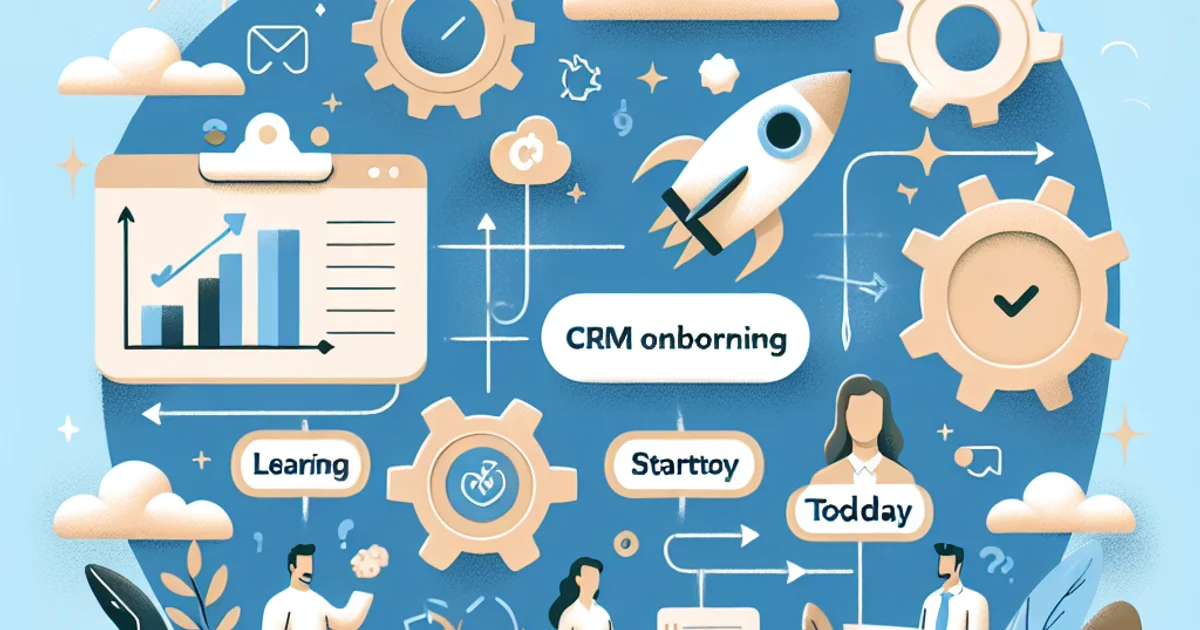
For startups, the process of onboarding a Customer Relationship Management (CRM) system can feel daunting. Without a structured approach, it can quickly become an overwhelming task. This guide is designed for founders and small teams who are new to CRM systems, providing them with practical strategies to ensure successful onboarding. The focus here is on crafting a tailored approach that meets the unique needs of startups, which often operate with limited resources and dynamic priorities.
The Practical Framework
Onboarding a CRM involves several crucial steps that ensure the system is set up to support business goals effectively. Here are the key steps:
1. Define Clear Objectives
Before diving into the technical aspects, it's essential to define what success looks like for your startup. Are you looking to improve customer service, enhance sales tracking, or generate more accurate reports? Clearly defined objectives will guide the onboarding process and help in customizing the CRM to your needs.
2. Choose the Right CRM
Not all CRMs are created equal, and what works for one startup might not work for another. Consider factors like ease of use, scalability, and integration capabilities. For startups, a CRM that can grow with the company is crucial.
3. Assemble a Dedicated Team
Identify team members who will be responsible for the CRM's implementation and ongoing management. This team should include representatives from sales, marketing, and customer service to ensure all perspectives are considered.
4. Map Your Customer Journey
Understanding your customer's journey is vital for configuring the CRM to support it. Map out each touchpoint and how the CRM can enhance the experience at each stage.
5. Customize for Your Needs
Once the CRM is in place, tailor it to fit your startup's specific workflows. This might involve setting up custom fields, automating processes, or creating tailored dashboards.
6. Train Your Team
Effective CRM training is crucial for adoption. Provide training sessions that are role-specific, ensuring each team member understands how to use the CRM effectively in their daily tasks.
7. Monitor and Iterate
After going live, continuously monitor the CRM's performance and gather feedback from users. Use this information to make iterative improvements and optimize the system.
Example Scenarios
Consider a tech startup with a team of five, aiming to improve their sales processes. They start by defining their primary goal: reducing the sales cycle length. After choosing a CRM that offers robust sales pipeline management features, they customize it to reflect their unique sales stages. By providing targeted training focusing on sales tracking and reporting, they ensure the team can leverage the CRM effectively.
In contrast, a small e-commerce startup might focus on enhancing customer service. Here, the CRM is configured to streamline customer interactions, integrating with their existing help desk software to provide a seamless experience. The team prioritizes training on customer communication features, ensuring prompt and efficient responses to inquiries.
Common Mistakes
Avoiding common pitfalls can make or break CRM onboarding:
1. Lack of Clear Objectives
Without clear goals, the CRM's implementation can become unfocused. Ensure every team member understands the system's purpose and how it aligns with the startup's objectives.
2. Inadequate Training
Skipping thorough training leads to poor adoption rates. Invest time in training sessions that cater to different roles and learning styles.
3. Overcomplicating the System
Startups often try to implement too many features at once. Focus on core functionalities first and expand as needed, avoiding unnecessary complexity.
4. Ignoring User Feedback
Feedback from users is invaluable for making improvements. Regular check-ins can identify pain points and areas for enhancement.
5. Poor Data Quality
Entering incorrect or inconsistent data can undermine the CRM's effectiveness. Implement data quality checks and establish clear data entry guidelines.
Options & Trade-offs
When selecting a CRM, consider these options:
SaaS vs. On-Premise
SaaS solutions offer flexibility and lower upfront costs, making them ideal for startups. On-premise solutions provide more control but require significant IT resources and maintenance.
Customizable vs. Out-of-the-Box
Some CRMs are highly customizable, allowing for tailored solutions but often requiring more setup time. Out-of-the-box solutions are quicker to implement but may lack specific features your startup needs.
Timeline & Effort
The onboarding process can typically be broken down into several phases:
Phase 1: Preparation (1-2 weeks)
Focus on defining objectives and assembling your team.
Phase 2: Implementation (2-4 weeks)
Set up the CRM, customize it, and conduct initial testing.
Phase 3: Training and Launch (1-2 weeks)
Conduct training sessions and go live with the CRM.
Phase 4: Optimization (Ongoing)
Regularly review and optimize the CRM based on user feedback.
Costs
Costs can vary widely based on the CRM chosen and the complexity of customization. SaaS CRMs typically have subscription fees, while on-premise solutions incur higher initial costs. Consider factors such as the number of users, required integrations, and the level of customization when estimating costs.
Wrap-up & Next Steps
Successfully onboarding a CRM requires careful planning and execution. Here's what to do next:
- Define clear objectives for your CRM.
- Choose a CRM that fits your startup's needs.
- Assemble a dedicated team for implementation.
- Customize the CRM to align with your workflows.
- Invest in thorough training for your team.
- Monitor performance and iterate for improvement.
For more insights, explore advanced CRM features that can further enhance your startup's growth.
Frequently asked questions
Q: What are the key steps in CRM onboarding for startups?
The key steps in CRM onboarding for startups include defining clear objectives, selecting the right CRM platform, effectively training the team, and continuously evaluating and refining processes.
Q: How do I choose the right CRM platform for my startup?
To choose the right CRM platform for your startup, consider factors such as ease of use, scalability, integration capabilities with existing tools, and cost relative to your budget.
Q: Why is CRM onboarding important for startups?
CRM onboarding is important for startups because it ensures the team can effectively use the CRM system to enhance customer management, increase sales, and optimize business processes, which are crucial for growth.
Related guides

crm for lead conversion optimization: boost sales
Discover how to optimize your CRM to improve lead conversions. Gain insights into strategies and practical tips to boost your sales.
Rasmus Rowbotham
crm for startup customer success: Boost growth
Discover how crm for startup customer success can enhance your business growth. Implement effective strategies and tools for small teams.
Rasmus Rowbotham
crm customization for startups: Boost efficiency
Learn how to customize your CRM for your startup and enhance efficiency. Get tailored solutions and optimize your business.
Rasmus Rowbotham